Free Guides And Articles To Help You Build The Modern Fit Physique
Learn the important training, nutrition, and lifestyle principles and strategies that are crucial for building the Modern Fit Physique.
Is Fasted Cardio Better For Fat Loss?
What Is Fasted Cardio?
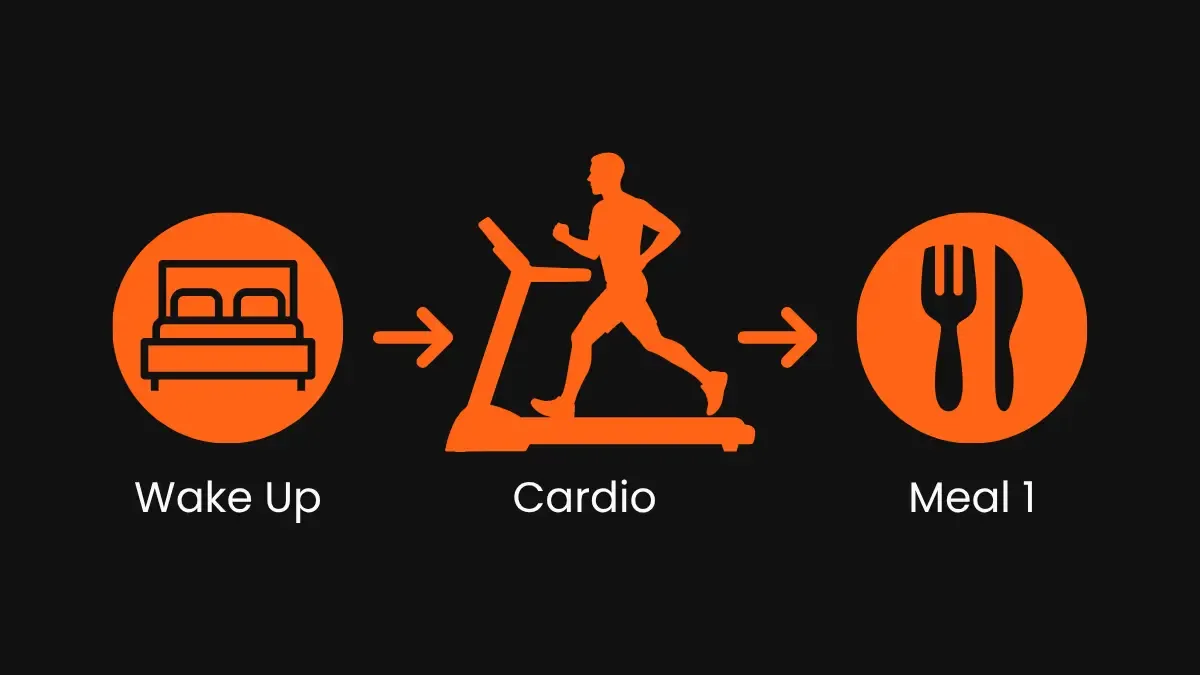
Fasted cardio is a popular strategy, especially for fat loss, but is it actually better for fat loss compared to performing cardio while you’re fed? The answer isn’t entirely clear. While there may be a slight benefit to fasted cardio when used to aid fat loss, it can also be detrimental in certain situations and for some individuals.
As the name suggests, fasted cardio is simply cardio performed in a fasted state. Fasted cardio is typically performed first thing in the morning after an overnight fast, although it can be performed at any time. If you are following an intermittent fasting protocol and have skipped breakfast, you could perform fasted cardio before your first meal.
Why Do People Perform Fasted Cardio?
People typically perform fasted cardio because they believe it is better for fat loss, and intuitively this makes sense. The other main reason people perform fasted cardio is convenience. Performing cardio first thing in the morning before breakfast can be convenient for many people and can be the best time of day to perform their cardio sessions.
Is Fasted Cardio Better For Fat Loss?
The efficacy of fasted cardio is still contested, and how much of a difference fasted cardio makes to fat loss is still debated within the fitness industry. Some fitness professionals adhere to this theory, although the evidence for this remains unclear at this point.
The theory behind fasted cardio is that when you perform cardio in a fasted state, your body uses mostly body fat for energy, compared to when you perform cardio in a fed state, where carbohydrates are more readily available. Therefore, performing cardio in a fasted state increases the amount of body fat burned for energy.
One important point to remember here is that the body will preferentially use different energy sources, depending on the intensity of the activity we are performing, regardless of whether we are in a fasted state or not. Lower-intensity activities such as walking and low-intensity cardio will use fat oxidation to a greater degree, while higher-intensity activities such as moderate and high-intensity cardio will use more glycogen (stored carbohydrates in the muscles) for energy.
What Does The Research Say About Fasted Cardio For Fat Loss?
So is fasted cardio better for fat loss? and does fasted cardio burn more fat? The Research shows that aerobic exercise performed in a fasted state, or any fasted exercise does increase fat oxidation, compared to performing cardio in a fed state. Fat burning is increased during the time you are exercising, however, this does not mean that you will necessarily lose more body fat.
Interestingly a study showed that participants who ran in a fasted state burnt more fat and less carbohydrates during their run, and less fat and more carbohydrates during the rest of the day. Participants who ran in a fed state burnt less fat and more carbohydrates during their run, and more fat and less carbohydrates during the rest of the day.
Another study showed that body composition changes (fat loss) when performing regular fasted cardio in conjunction with a hypocaloric diet (calorie deficit) are similar regardless of whether cardio is performed in a fasted or fed state. Our body is always burning a combination of fat and carbohydrates at different times.
We have known for decades that the number one driver of fat loss is a negative energy balance. When the body is using more calories than it is expending over a set period, we will lose body fat, regardless of whether we burn fat to a greater or lesser extent when performing fasted cardio or cardio in a fed state.
Are There Any Benefits To Fasted Cardio?
If the research points to fasted cardio being no better for fat loss compared to fed cardio, are there any other benefits to performing fasted cardio? Well, maybe.
Fasted Cardio May Be Slightly More Effective For Fat Loss?
Research can only point to what the ultimate truth may be; this is especially true in sports and exercise science, so we should not only rely on what the science says. We cannot dismiss anecdotal evidence completely, and the experience of coaches working with real people in the real world, over decades, should be considered. This is true in regards to all areas of fitness, whether we are looking at the potential benefits of fasted cardio or other areas of fitness such as building muscle.
Coaches, as well as physique competitors, have used fasted cardio for decades. Performing cardio on an empty stomach is a widely used practice. Most coaches are aware of what the science says in regard to fasted cardio and fat loss; however, some coaches do report better results with themselves and their clients and believe it is slightly more effective than performing cardio in a fed state, and so continue to use it.
Performing Fasted Cardio First Thing In The Morning Is A Great Habit To Build
One of the benefits of fasted cardio is that performing cardio first thing in the morning is a great habit to build and can lead to greater consistency and adherence. Performing morning fasted cardio will mean you do not have to waste time making breakfast and can get straight into your cardio session. With your cardio session completed before your day has even started, there is far less risk of life getting in the way and you skipping your planned session, especially if you have a busy and often stressful lifestyle (almost everyone).
Performing Fasted Cardio First Thing In The Morning Is The Best Time For Many People
Another of the benefits of fasted cardio is that the morning is often the best time or the only time people can get in a cardio session. Performing cardio at home can be a great idea, for convenience and time management, and many people are happy to invest some money into a decent piece of cardio equipment for their home. Performing cardio first thing in the morning upon waking, before the rest of the family is awake, may be the best time for some people.
Some People Feel Better Performing Cardio On An Empty Stomach
Some people report they feel better when they avoid eating before a workout and prefer to perform cardio on an empty stomach, and this can be a potential benefit of fasted cardio for some individuals.
Fasted Cardio Can Set You Up For A Great Day
Cardio is great for improving your mood and can even help with symptoms of anxiety and depression. Performing fasted cardio first thing in the morning is a great way to start your day and can set you up well for the day ahead. Starting your day in a positive and happy mood cannot be underestimated.
Fasted Cardio Can Fit Well With Intermittent Fasting
We do not typically recommend intermittent fasting, with that said, fasted cardio can fit in well with the intermittent fasting lifestyle for those who want to experiment with this eating strategy. You do not need to perform fasted cardio in the morning, performing a cardio session any time before your first meal of the day is an option, depending on the intermittent fasting protocol you are following.
What Are The Potential Downsides To Fasted Cardio?
There are some potential downsides to performing fasted cardio, which should be taken into consideration, and these will likely be more or less of an issue depending on the individual, their current lifestyle, and their current circumstances.
Fasted Cardio Can Increase Cortisol
Fasted cardio is more stressful on the body, and will increase the stress hormone cortisol to a greater degree than performing cardio in a fed state, as seen in this study. Cortisol is one of the primary stress hormones, and elevating this has been associated with fat gain, especially around the abdominal area. It is also catabolic to muscle, meaning it will break muscle tissue down to supply glucose to the body when there is not sufficient glucose provided from carbohydrates.
Exercise elevates cortisol to some degree, and so increasing this further through fasted cardio can be problematic, particularly for individuals who already have elevated cortisol levels, which can be a large percentage of the population. People will often be performing fasted cardio in a fat loss phase while in a calorie deficit, which in itself raises cortisol levels even further.
Fasted Cardio Can Decrease Performance
If your goal is performance, fasted cardio may decrease performance compared to performing cardio in a fed state. This will likely depend on the intensity you are working at as well as the duration. People who perform fasted cardio regularly can likely adapt to performing in a fasted state to some degree, and some people report no drop in performance. However, the majority of people do perform better in a fed state in my experience.
You May Burn Less Calories
Related to the point above, fasted cardio can burn fewer calories if performance is reduced when performing fasted cardio, which may affect rates of fat loss to a degree. This is likely not a major concern in my opinion, as the number one tool we can use to maintain a negative energy balance is our diet, and adhering to a calorie deficit.
Fasted Cardio May Be Detrimental To Muscle Growth
Fasted cardio may be detrimental to muscle growth if the stress hormone cortisol is chronically elevated, as mentioned previously, although this will depend on the individual and their current physiological health. Bodybuilders have used fasted cardio for decades and do not report such issues.
Fasted Cardio May Cause Low Blood Sugar And Dizziness
Some people do not do well with fasted cardio and can experience low blood sugar and dizziness, even when working at a fairly low intensity, although this is not typical.
Fasted Cardio Can Be A Bad Idea For Individuals With Stressful Lifestyles
Considering all of the points mentioned above, combining fasted cardio with a busy and stressful modern lifestyle can be a bad idea for some individuals, and will raise stress further, likely causing detrimental effects.
Fasted Cardio And Building The Modern Fit Physique
As part of our overall health and fitness philosophy, we believe in keeping the stress hormones as low as possible. We can’t avoid stress altogether, and we do not need to; however, we are firm believers in mitigating as much stress as possible in areas that we have control over.
During a fat loss phase, stress hormones such as cortisol will be higher, especially if we are training hard in the gym to build or maintain muscle. Creating a calorie deficit is required for any meaningful fat loss, and this will increase stress and cortisol further. This is something we cannot avoid altogether, no matter how well we set up a fat loss phase.
With this in mind, we try to minimise stress in the areas we can control, and since we can achieve fat loss without having to perform fasted cardio, we see no reason to perform it.
What If Performing Cardio First Thing In The Morning Is The Best Time For You?
In phase one of building the Modern Fit Physique, we typically perform cardio after our strength training sessions as well as on days we do not strength train if needed. With that said, if performing cardio first thing in the morning is a good fit for your lifestyle, here are some recommendations:
Keep The Intensity Low
Fasted cardio should be kept at a low intensity around zone 2. Don’t be fixated by the numbers, though, working to what some calculation predicts your zone 2 heart rate to be. If it feels too hard, drop the intensity. It is perfectly okay to go by feel.
Semi-Fasted Cardio
If the only realistic time you can perform your cardio is first thing in the morning, consider semi-fasted cardio. Instead of performing your cardio completely fasted, consume some simple sugars before. This can be something as simple as a glass of orange juice or any other juice. This will be digested quickly and will lower cortisol levels while providing some fuel for your cardio session.
Eat As Soon As You Can After Your Cardio Session
Try to eat a balanced meal consisting of protein, carbohydrates, and fat, as soon as you can after your fasted or semi-fasted cardio session, to help bring cortisol down and aid in recovery.
Consider Walking
Performing zone 1 cardio, such as walking, is extremely low intensity and would be less stressful compared to performing fasted cardio at a higher intensity level. This should be a brisk walk, and if you are in the gym, incline treadmill walking is a great idea. The only downside to this is that it requires more time to burn a decent number of calories, and is not always practical for most people.
Fasted Cardio FAQ's
Keeping fasted cardio sessions relatively short, around 25-45 minutes, is a good idea. This will help mitigate stress as much as possible. We would not recommend long-duration fasted cardio sessions of one hour or more, unless you are performing extremely low-intensity cardio at around zone 1.
Perform fasted cardio at a low intensity, around zone 2. For most people, this will be at a heart rate of around 120-130, although this will depend on their fitness level. You can also work at a very low intensity, such as walking or incline walking on a treadmill. Incline treadmill walking can also be used for zone 2 or even zone 3 training, depending on the incline level and speed.
Yes, you can drink tea or coffee before a fasted cardio session as long as they do not contain any calories from sugar, milk, or cream. Black coffee is widely used before fasted cardio and is a good way to wake you up and give you a little extra energy without consuming calories.
Drinking black coffee and performing fasted cardio will increase cortisol, so this is why we do not typically recommend this approach for everyone. With that said, some coaches believe this strategy is slightly more effective for fat loss. Over the long term, it will likely make little difference to your overall fat loss results.
Aim to eat as soon as possible after a fasted cardio session, and definitely within 30 minutes of finishing. A balanced meal of protein, carbohydrates, and fat is recommended to bring down cortisol levels and aid in recovery. If you are unable to consume a complete meal, a protein shake and a piece of fruit would be a good option.
If you are following a regular eating schedule, you will likely need to perform fasted cardio first thing in the morning. If you are eating your first meal of the day a little later, you have more options and can perform fasted cardio anytime before your first meal.
Some people like to take some branched-chain amino acids (BCAAs) before their fasted cardio, as an insurance policy against losing muscle. Consuming branched-chain amino acids will not take your body out of the fasted state. How much of a difference this makes to mitigating any potential loss of muscle while performing fasted cardio is unclear at this time.
Conclusion
Fasted cardio can be a viable option for some people, although the benefits of fasted versus fed cardio for fat loss are unclear at this point. The main benefits of fasted cardio come down to lifestyle factors such as convenience, as well as habit building. With that said, fasted cardio is not great for everyone, and can even be detrimental to some individuals.
For individuals with more stressful lifestyles, fasted cardio may not be such a great idea. The only way to know if fasted cardio is right for you is to try it out and see how you feel. The one thing that is certain is we do not need to perform fasted cardio to achieve fat loss, and if there are any benefits to performing fasted cardio for fat loss, the benefits are likely fairly small.